%201.svg)


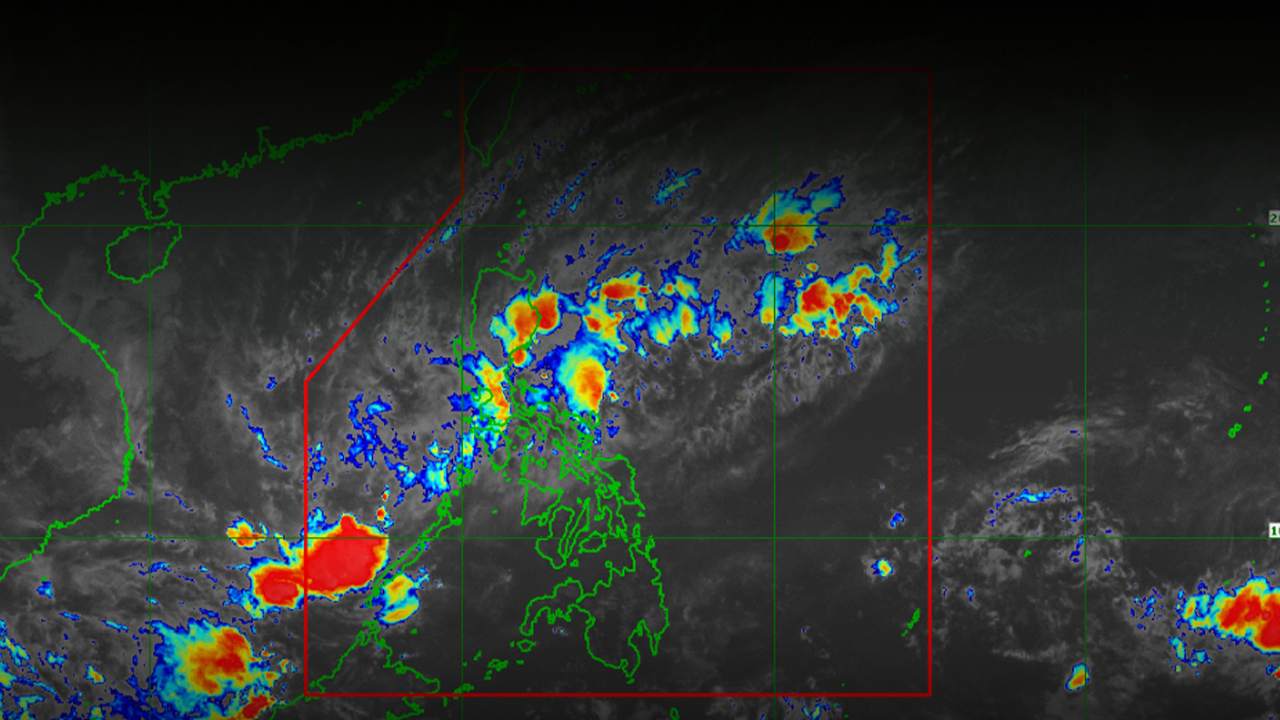
According to PAGASA, the Philippine climate is tropical and maritime, experiencing high temperatures and humidity, and abundant rainfall.
Along with that, many netizens on different social media platforms believe that Sierra Madre saves us from devastating typhoons. It was believed that the Sierra Madre Mountain Ranges (SMMR) had the power to lessen the strength of the typhoon that passes over there.
In an exclusive interview with UNTV, a Division Head of History, Culture, and Arts for the Laguna Tourism Culture and Arts and Trade Office, Dr. Peter Jaynul Uckung, reiterated the protective role of Sierra Madre through ancient Filipino folklore.
According to the legend, a mother once sacrificed herself to shield her two children, Iloco and Tagalo, from the destructive force of Bugsong Hangin by lying herself down as a natural barrier against the fierce winds.
He also mentioned that this is a metaphor of a real phenomenon.
But what about the scientific side? What does science say about this clamor on the internet pertaining to Sierra Madre?
Dr. Gerry Bagtasa, an Atmospheric Physicist at the UP College of Science Institute of Environmental Science and Meteorology, elucidated that once the typhoon lands, whether the terrain is flat or not, its strength will eventually weaken.
“In fact, ang lupa kahit walang bundok, basta lupa lang, pwedeng magpahina na ng bagyo once na ‘yung bagyo tumuntong sa lupa.” he said in an exclusive interview with UNTV.
[“In fact, even if the land has no mountains, as long as it has a land, it can already weaken the typhoon, once it makes landfall.”]
Dr. Bagtasa explained that the energy of the typhoon draws its strength from ocean water through evaporation. Once a storm makes landfall, even on flat terrain, it loses its energy source since land cannot provide the same evaporative power as the sea. Without this crucial fuel, the typhoon gradually weakens over time.
In 2023, Bagtasa, together with Racoma, conducted a research entitled “Does the Sierra Madre Mountain Range in Luzon Act as a Barrier to Typhoons?”.
This initiative is supported by DOST-Council for Industry, Energy and Emerging Technology Research and Development, which was recently published in the Philippine Journal of Science.
This research includes their investigation into the effect of the Sierra Madre and Cordillera Mountain Ranges on both wind and rain hazards.
Moreover, it also figures out if those mountain ranges have a mitigating effect on the hazards of tropical cyclones.
Dr. Bagtasa proclaims that Sierra Madre barely weakens the typhoon, stating:
“Kung ang tanong natin kung nakakapagpahina ba? Nakakapagpahina naman nang bahagya.”
[“If our question is, " Is [the Sierra Madre] weakening the typhoonDuring the rainy season, a series of typhoons devastates a lot of areas in Luzon. Low lying areas are prone to floods, landslides, and other related casualties. ."]
Dr. Bagtasa further noted that Sierra Madre's elevation is insufficient to produce a major mitigating effect compared to the several mountain ranges in Taiwan, where the storm loses its strength on the highest parts of the mountains that pass there.
“Sierra Madre is not high enough para magkaroon ng significant effect sa most ng bagyo na dumadaan. Of course, not to say na wala siyang effect at all ah, may effect siya.” he said
[“Sierra Madre is not high enough to have a significant effect on most of the typhoons that have been passing there. Of course, not to say that it has no effect at all, it has an effect.”]
Moreover, Dr. Bagtasa shared his perspective on Sierra Madre's protective capacity, expressing skepticism about its role as a shield. He explained that the mountain range has a contextual impact - weakening typhoons in some areas while intensifying rainfall in others.
Despite ongoing debate, Dr. Bagtasa emphasized the critical importance of protecting Sierra Madre as one of the Philippines' remaining dense forest covers.
The mountain range provides invaluable ecological services, from rich biodiversity to unique flora and fauna found nowhere else in the world. Without adequate protection and preservation, these resources face high risk of depletion.
He cautioned against complacency, pointing out that numerous devastating typhoons have struck Cagayan Valley and Tuguegarao despite the mountain range's weakening effect. The storms passing through these areas remain dangerous regardless of any mitigation.
Dr. Bagtasa highlighted the essential role of local government DRRM officers in disaster preparedness. He stressed that educating communities about potential typhoon impacts should be the primary focus for preventing casualties and reducing disaster risks.
Beyond the public's discussion, take time to realize that it would be a winning joint effort if the environment saves people, vice versa.
So, what do you think? Does Sierra Madre truly serve as a natural barrier against devastating typhoons, and how can we better protect this vital mountain range?
For more comprehensive discussion about Sierra Madre, watch this video: https://youtu.be/U2lQtGsvblg?si=uiy49iN5Z8leIg_Q